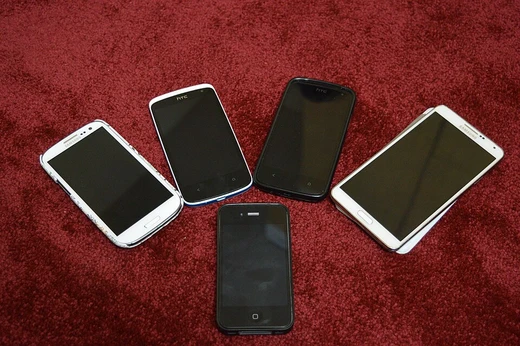
Text messaging
Electronic messaging between mobile devices via SMS, MMS, and apps.

Text messaging, or texting, is the act of composing and sending electronic messages, typically consisting of alphabetic and numeric characters, between users of mobile phones, tablets, smartwatches, desktops/laptops, or other compatible computers. It originally referred to messages sent using the Short Message Service (SMS) on mobile devices and has grown to include multimedia messages via MMS and RCS, as well as instant messaging apps. Text messaging has been an extremely popular medium of communication since the turn of the century and has influenced changes in society.
- first SMS sender
- Neil Papworth
- first SMS recipient
- Richard Jarvis
- first nation with cross-network SMS
- Finland
- first GSM carrier in America
- American Personal Communications (APC)
- global active SMS users by end of 2007
- 74% of all mobile phone users (2.4 billion)
Lore & Background
The first technical solution evolved under Finn Trosby's leadership, and was further developed by Kevin Holley and Ian Harris. SMS became an integral part of Signalling System No. 7 (SS7), coded in ITU-T 'T.56' text format, and made its way to mobile phones via GSM's basis in ISDN. Operators were slow to set up charging systems and eliminate billing fraud. Over time, switch billing and new SMSC features resolved these issues. By the end of 2007, text messaging was the most widely used mobile data service, with 74% of all mobile phone users worldwide (2.4 billion out of 3.3 billion) being active SMS users. In Finland, Sweden, and Norway, over 85% of the population used SMS; the European average was about 80%, and North America had over 60% active users by end of 2008.
Reader's Guide
Text messaging has fundamentally altered personal and professional communication by enabling asynchronous, brief exchanges that do not require both parties to be simultaneously available. Unlike voice calls, texting allows communication in contexts where a call would be impolite or inappropriate, such as late at night or during meetings. It has become a mainstream and accepted part of many cultures, similar to email. Text messaging also enabled new commercial and social uses, including direct marketing, automated interactions with e-commerce systems, and remote control of home appliances via Flash SMS. Its popularity has been particularly high in Europe, Asia (excluding Japan), the United States, Australia, and New Zealand, and it has gained influence in Africa. By 2012, young Asians considered SMS the most popular mobile phone application, and 50 percent of American teens sent 50 or more text messages per day, making it their most frequent form of communication. The term 'texting' has entered the common lexicon as a verb for sending short messages back and forth.
Did You Know?
- By the end of 2007, 74% of all mobile phone users worldwide (2.4 billion people) were active SMS users.
Frequently Asked Questions
What is Text messaging?
Text messaging is the practice of composing and sending short electronic messages—typically made up of letters and numbers—between mobile phones, tablets, smartwatches, or other compatible devices. It started with SMS on mobile phones and has since broadened to cover multimedia messages and instant messaging apps.
Who sent and received the very first text message?
Neil Papworth composed and dispatched the first SMS, while Richard Jarvis was the recipient on the other end. That single exchange marked the birth of electronic messaging between mobile devices.
What are Text messaging's core capabilities or 'powers'?
At its foundation, text messaging lets users swap alphabetic and numeric characters across phones, tablets, smartwatches, desktops, and laptops. Over time it expanded well beyond plain SMS to include multimedia via MMS and RCS, as well as full instant messaging through dedicated apps.
Why is Text messaging considered important in communication history?
Since the turn of the century, texting has become one of the most pervasive forms of everyday communication, reaching 74 percent of all mobile phone users—roughly 2.4 billion people—by the end of 2007. Its sheer ubiquity has reshaped social habits and the way people interact on a daily basis.
Which country and carrier were the firsts in texting infrastructure?
Finland was the first nation to offer cross-network SMS, allowing users on different carriers to message one another. In the United States, American Personal Communications (APC) was the first GSM carrier to bring this service to American consumers.
More in Communication And Media 1-21
Spotted an error? Know more?
This is a living reference — every entry is fact-audited, and reader corrections feed straight into our audit queue. Suggest an edit · See this site's audit record